فارسی
 Русский
 Türkçe
 العربية
 Español
 Português
 Italiano
 Français
 Deutsch
 中文
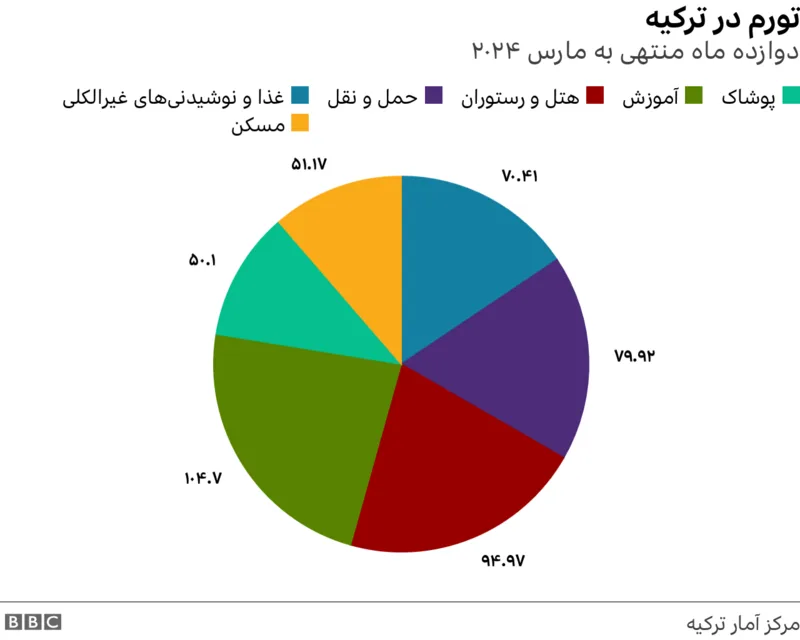
According to the Turkish Statistical Institute, the twelve-month inflation rate to March has reached 68.5 percent. In the same period a year earlier, the figure was above 50 percent.
The latest official figures on Turkey's inflation were announced as the food and non-alcoholic beverages, transport, and health categories all recorded inflation above 70 percent in March.
The sharpest price jump in Turkey over the year to March was in education, where prices more than doubled within a year.
The hotels, cafes, and restaurants category ranked second on the list of highest inflation rates; inflation in this sector was reported at nearly 95 percent in March.
The near-70-percent inflation rate for March was announced at a time when the rate stood at around 38 percent in July last year (2023), meaning it has almost doubled in about nine months.
The data on rising prices of goods and services in Turkey comes after local council and municipal elections were held in the country on Sunday, and following the announcement of the results, the value of the Turkish lira against the dollar fell once again.
Concerns over a further decline in the lira's value have led to greater demand among Turkish citizens for holding foreign currencies.
One US dollar is now worth nearly 32 Turkish lira.
After last year's presidential election, the national currency lost up to 7 percent of its value in a single day, and many fear the lira's decline will now continue.
The Turkish lira was the worst performer among the currencies of so-called emerging markets last month, losing about 3.2 percent of its value against the dollar.
Inflation in Turkey intensified about three years ago, when the country's central bank repeatedly cut interest rates.
Many of the world's major economies raise interest rates to control inflation, but Turkish President Recep Tayyip Erdoğan took a different course, even though many experts had warned of the consequences.
Over about three years, three heads of Turkey's central bank were dismissed on Mr. Erdoğan's orders, which fueled distrust among foreign investors.
The rise in the prices of goods and services in Turkey intensified with Russia's invasion of Ukraine.
Turkey: A Popular Destination for Iranians
Turkey has traditionally been a destination for many Iranian travelers, whether for a short holiday, so-called «suitcase» trade, or residency through investment.
Rising inflation in Turkey, together with the increase in the exchange rate in Iran, where the dollar is now sold on the open market for about 63,000 tomans, has created a situation for Iranians that is different from before.
The data released today by the Turkish Statistical Institute shows that the hotels, cafes, and restaurants category experienced inflation of nearly 95 percent in March. This sector is very important for leisure travelers, and it has increased their costs compared with the past.
Some Iranian travelers who regularly visit Turkey say prices of goods and services in the country have risen in recent years.
According to statements by Iranian officials, roughly 6 million Iranians travel to Turkey every year.
Turkey's Ministry of Culture and Tourism says that about 438,000 Iranian citizens traveled to Turkey in the first two months of 2024.
Nevertheless, in late Bahman (February), the newspaper Hamshahri published a report according to which, even accounting for Turkey's inflation and the jump in the exchange rate in Iran, a short trip to Turkey costs less than a trip to some Iranian cities.
After Russia's invasion of Ukraine, housing prices and rents rose in cities such as Istanbul and Antalya, which have traditionally been the first choice for many foreign buyers.
Before the invasion, Iranians had been the largest foreign buyers of homes in Turkey for months, a lead that was overtaken by Russian citizens.
After the war in Ukraine, and as demand for homes in cities such as Istanbul and Antalya grew, the cost of obtaining citizenship through investment rose from 250,000 dollars to 400,000 dollars.
In February this year, Iranians ranked second among the largest foreign buyers of homes in the neighboring country, with 200 homes purchased; the figure for Russians was 395, and they remain the largest foreign buyers of homes in Turkey.
Source: BBC Persian
Source link: https://www.bbc.com/persian/articles/clm77p0l2zzo